Staying Positive When Technology Won’t Stand Still
Lemon Drop Mondays Issue #54 - August 3. 2026 🧠 Mindset & Psychology

We here at Positive Lemons often think about technology. We reach you every week using technology that didn’t exist when the oldest member of the team (me) was a child, and that the youngest member of the team cannot conceive of a world without. We use programs that can generate images in seconds that would have taken the systems of just ten years ago days to create, access the internet from anywhere, yet still tell the folks at the phone store that the primary thing we want in a smartphone is the ability to make and receive calls.
It’s kind of crazy, in a way, and yet the march of technology over a lifetime is nothing new. My great-grandmother often marveled that her family used a horse and buggy when she was a girl, and she went on to see a man walk on the surface of the moon.
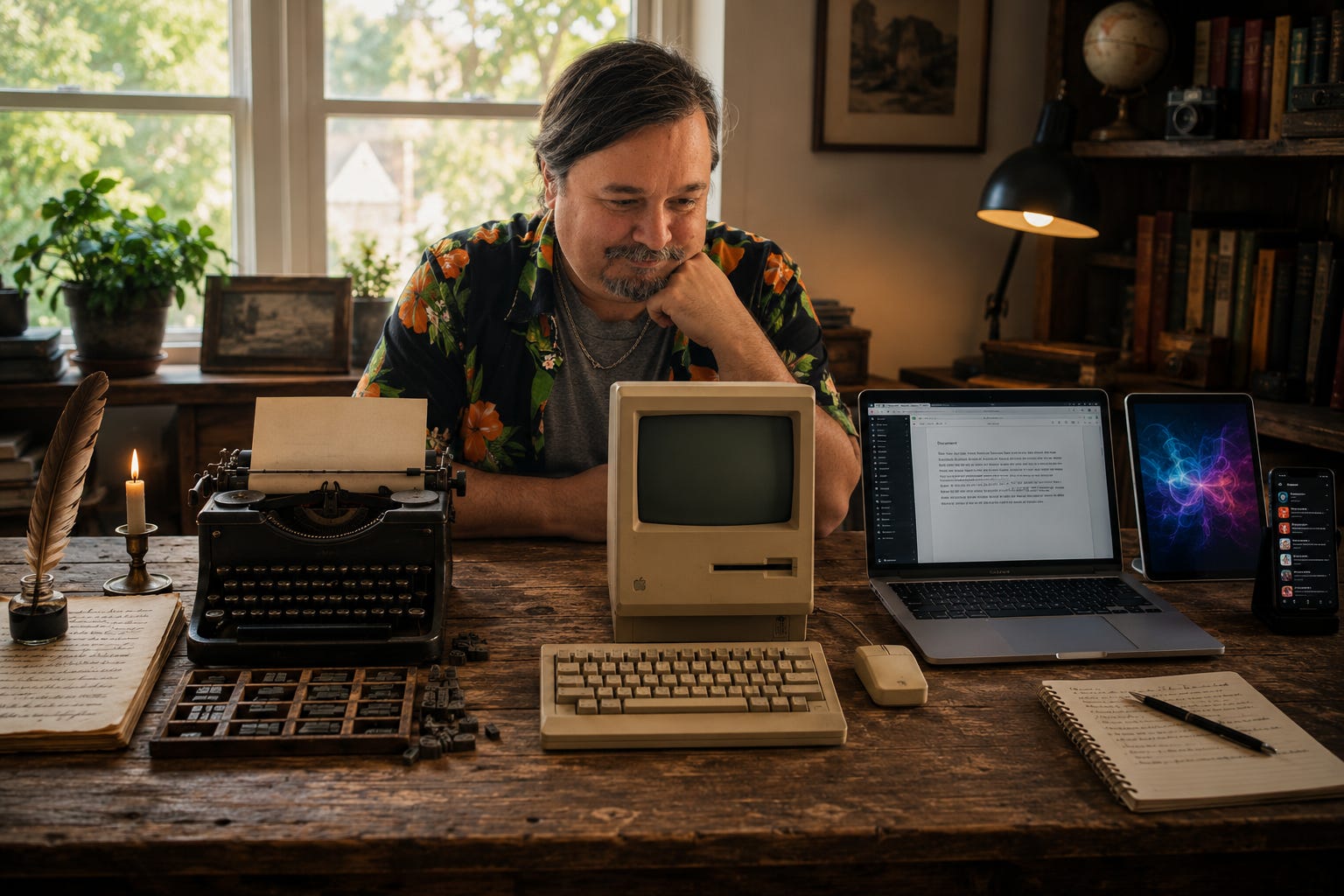
My great-grandmother lived through the Second Industrial Revolution and into the Third. I grew up in the Third, and now my daughter is firmly a part of the Fourth. Instead of an age of industry, we now live in a digital age where things seem to change on the technology front on an almost weekly basis. It can get overwhelming, and it can be hard to stay positive, and that’s what we’re talking about today.
🍋 A Thought from the Heart
Technology has a way of changing the world. Our ancient ancestors’ acquisition of the secret of fire changed their world through the provision of cooked meats and warmth. Agriculture shifted society from one of roaming hunter-gatherers onto the path that led to towns and cities. The printing press began a shift that brought the written word to the masses, changing access to information and boosting literacy.
These changes happened so long ago that we take them for granted and look back on them as great achievements that helped lead us to our modern age. We’re so far disconnected that we only see the benefits, and lose sight of the disruptions that such changes caused.
Before the printing press, books were copied by hand. Scribes had to copy everything from a text onto a new blank page. As you can imagine, this was rather time-consuming, and the people who did this work were skilled, educated workers who had a secure place in society… after all, who else could do their jobs?
Then Gutenberg developed his press and movable type, and suddenly things did not need to be copied by hand one word at a time. Whole pages could be printed at one time, and once the type for the page was set, the printer could make many, many copies. It sounds wonderful, but it rendered the services of those men who painstakingly copied texts over by hand obsolete, and in essence put a lot of them right out of work.
It was a major shift in the world, and many have followed. The most recent example is the rise of artificial intelligence, which was the stuff of science fiction in my youth. Depending on who you talk to, AI is going to make our lives easier, or take all our jobs. It is going to cure diseases, or give rise to killer robots that will wipe us all out. It will inspire and unleash our ability to create, or it is going to absolutely destroy creativity.
As you can see, there’s a lot of uncertainty in the world about it, and there’s a lot to take in. The truth is probably going to be somewhere in the middle, when it is all said and done. Still, with all the chatter going on about it, it’s perfectly reasonable to feel more than one way about it. New tools can be impressive and unsettling at the same time. It’s reasonable to recognize what AI might make possible without pretending there aren’t serious questions about how it’ll affect our lives.
And that’s not just my opinion. While I was working on this article, I ran across some survey results cited by Calm. The survey found almost equal numbers of people describing themselves as anxious, optimistic, and excited about AI, with many feeling both amazed and nervous.
Not surprisingly, those mixed feelings come from a mix of places. Grant Blashki of the University of Melbourne says that AI anxiety is shaped by factors like our work, values, technical knowledge, and circumstances. This makes sense. A person who believes automation will threaten the job they depend on is naturally going to see things in a different light from someone whose concerns are more about whether or not they can trust what they are seeing online, and that’s different from an investor betting big on an AI company’s stocks.
There’s a point, though, where understandable concern becomes disruptive. The Cleveland Clinic describes technophobia as an intense fear that can lead someone to obsess over technology or avoid it so extensively that it interferes with daily life. That goes well beyond muttering something unkind at the printer (that happens here) or complaining after an update shifts the user interface and we keep clicking the wrong button.
Technophobia can make the most ordinary interactions with technology feel threatening. At that point, the problem is no longer simple frustration. The fear actually can limit what the person feels able to do.
Much more common is the idea of technostress, a term used to talk about the strain technology can place on our mental health. Lost sleep, constant distraction, and the fading boundary between work and home are all common ways it shows up, no killer robots required.
Given all this, no one can blame you if you’re feeling some technostress. We’re writers here at Positive Lemons by trade… and the rise of AI is making lots of changes in our field, some good, and some not so good. If you’re feeling some technostress… we’re there, too.
Now that we’ve established that we just might be in the same boat as you, the question is clear. How does one try to cope with so much technological change and remain positive?
For starters, it helps to determine exactly what is bothering us. Concern about AI affecting a job is not the same as exhaustion from being reachable at every hour. Neither of those is the same as worrying about who has access to our personal information. Once the cause of a concern, or concerns, is clear, it’s easier to face than a giant nebulous feeling of dread. This isn’t just good advice for this situation, by the way… it’s also good advice for dealing with most concerns.
It helps to remember that, while uncertainty is certainly uncomfortable, it’s not proof that the worst outcome is the one that’s going to happen any more than it means the best outcome is certain. Remaining positive doesn’t mean believing the promises or dismissing the warnings. It means giving ourselves time to understand what the technology actually does before letting fear decide everything, then choosing to make the best of it after we do understand it.
Remember those scribes? As it turns out, printing presses needed people who knew how to read and write to be the proofreaders, editors, and type designers. Making the best of things after they understood the new technology, some secular scribes found work in these areas… and some found work continuing to do handwritten materials. Even today, there is a market for handwritten specialty items. You’ve heard of someone hiring a calligrapher to do wedding invitations, right?
We can control, to an extent, just how quickly we end up using new technology. Some folks will try out every single new tool right away with the glee of a kid on Christmas morning, while some would prefer to let the ‘early adopters’ work out the bugs and make YouTube videos explaining how to make the instructions make sense. Neither approach is wrong, of course, nor is taking the middle course (I generally take that approach).
The tools we do use should have something in common, and that is the way they make life better for us. They shouldn’t leave us exhausted. There may be things you have to do, for example if your job requires you to be available 24-7, you probably ought to be… but remember you can control the things you can control. Taking control is a great way to help combat anxiety.
What about when it’s not in our hands? Most of us aren’t in control of how a company uses our information. We don’t decide how an employer deploys automation, and we don’t set the rules regulating AI companies. Staying positive doesn’t mean shrugging at any of that. It means doing what we can to Add Brightness in our own lives and advocating for the people making those larger decisions to make the ones that we feel are best.
🍋 Pillars Showing Up
Technological change may be continuing at a rapid pace, but we’ve got choices about how we respond to it.
Pause for Positivity
It seems every new development comes with a wave of promises and a tide of warnings. Taking a moment to pause gives us time to sort out what’s actually happening from the noise of conflicting opinions.
Uniquely, Perfectly, Beautifully, ME!
Not everyone approaches new technology the same way, and that’s perfectly okay. Just make sure you’re approaching it in the way that’s right for YOU.
Limes Are Good, Too!
Different people have different comfort levels using technology. One person may embrace a new technology because they find it convenient, while another person may avoid it because they find it invasive, and neither approach is inherently wrong.
Live in the Moment
Much of the anxiety surrounding new technology comes from trying to understand how it will impact a future that hasn’t happened yet. Staying present and focusing on what the technology is actually doing in our lives now can help keep us grounded.
🍋 Little Lemon Tip
When you’re feeling a bit of technostress, sit down and see if you can figure out the exact cause. Technology as a whole is a pretty big thing, but a specific a concern about an aspect of it can be much easier to address.
Speaking to Add Brightness
So, just putting this out there…
As we’re interested in spreading positivity, we’re happy to speak with organizations and groups about positivity.
Message us if you are interested, and we can chat about it.
🍋 Little Lemons: 3 Small Ways to Add Brightness
✨ Move At Your Pace… You are the one that decides how fast to add technology to your personal life… no one says you must be an early adopter.
✨ Phone a Friend... When tech gets frustrating, ask a friend who understands it. They’re likely to be more helpful than an hour of cussing at the machine and should be a sympathetic ear to boot!
✨ Keep what still works… New tools don’t make the old ones useless. If you’re comfortable with the one you are using… keep on using it.
Product spotlight
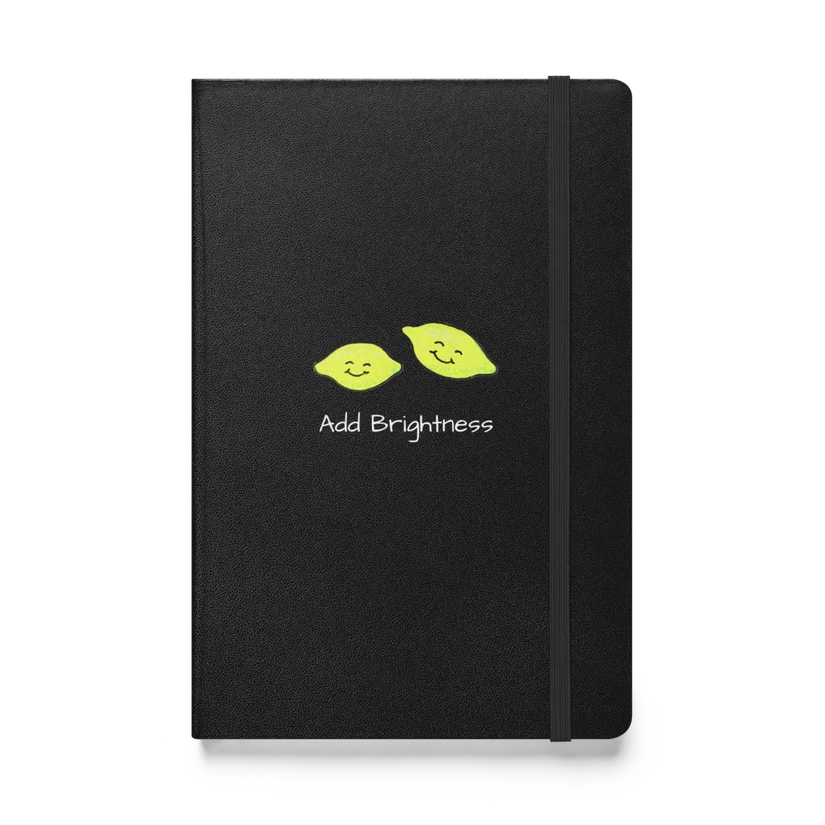
Add Brightness Hardcover Bound Notebook
Writing by hand may be old technology, but it’s still a great way to record your positive thoughts! May we suggest the Add Brightness Hardcover Bound Notebook?
🌐 This Week’s Positivity Picks
Some good news from around the web to Add Brightness to your feed:
✅ Man Walks Across the Country: A reminder that we all matter.
✅ Saving Salamanders: How one town city is saving amphibious friends.
Conclusion
For some people, new technology is exciting, while for others, it is a headache or even a source of anxiety. If there’s a new technology that’s intimidating you, it can help to take a step back and ask yourself what about it upsets you… and what opportunities there are whether or not you choose to embrace it right away.
When the sewing machine was invented, some skilled needleworkers feared they would be out of work, but many either embraced the new technology to produce more garments quickly or to add elaborate trims that would have been impractical by hand. At the same time, particularly skilled stitchers continued to produce bespoke, hand-sewn garments at a premium price, turning what was once commonplace into a luxury good.
In other words, that new technology that leaves a sour taste in your mouth may actually Add Brightness by offering a new opportunity.
The Positive Lemons Team
P.S. Know someone who could use a lift? Forward this newsletter and share the Brightness!
Don’t forget to follow along for daily drops of brightness:
📸 Instagram: @positivelemonsllc Facebook
🔗 Linktree: https://linktr.ee/positivelemonsllc
Positive Lemons Store:
https://positivelemons.printful.me/
Disclaimer: Positive Lemons is all about encouragement, reflection, and daily positivity.
Our content is meant to uplift and inspire, not to replace professional advice or treatment.
If you’re struggling or need help, please reach out to someone you trust or a qualified professional. 💛